Grape Branch with Leaf
A Real Embroiderer’s First Look at This Autumnal Design
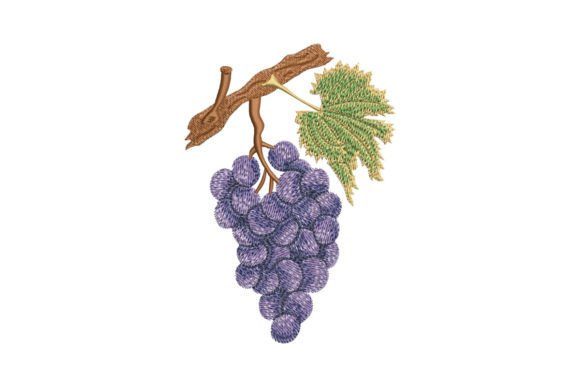
When I opened Grape Branch with Leaf for the first time, what struck me wasn’t just the charm—it was how immediately *usable* it felt. Not “cute” in a generic way, but grounded: a relaxed, organic curve of vine, three clusters of grapes rendered with subtle dimension, and one full leaf with gentle veins. It doesn’t shout. It invites—especially if your customers love seasonal warmth, kitchen charm, or thoughtful handmade gifts. As someone who’s stitched hundreds of designs for Etsy shops, boutique aprons, and custom baby blankets, I knew right away this wasn’t just another food-themed embroidery file—it’s a quiet workhorse with personality.
Where It Lives Best (and Why)
I recently used Grape Branch with Leaf on a set of linen tea towels for a local café’s autumn pop-up—and it landed perfectly. The design’s moderate width (no aggressive horizontal sprawl) and balanced vertical rhythm made it ideal for towel hems and corner accents. It also translated beautifully onto a lightweight cotton apron, placed just above the pocket. No distortion, no stitch crowding. That tells me Grape Branch with Leaf is naturally suited to medium-weight woven fabrics where drape and clarity matter: tea towels, pillow covers, tote bags, and even lightweight sweatshirts. Its visual weight sits comfortably between bold statement and delicate accent—ideal for small business merchandise that needs to feel intentional, not cluttered.
It’s especially strong as a personalized gift element. Imagine it stitched beside a monogram on a baby bib or embroidered on the back yoke of a child’s denim jacket. The grape motif reads as abundant, generous, and gently celebratory—great for harvest-themed weddings, housewarming presents, or even kitchen-themed baby showers. As an embroidery designer, I appreciate that it avoids overcomplication: no tiny stems, no fragile tendrils, no micro-details that vanish under thread. That means fewer re-hooping moments and more consistent results across batches.
Where to Pause—and Test First
That said, Grape Branch with Leaf isn’t magic on every surface. On highly textured fabrics like heavy terry cloth or bouclé, the leaf’s satin-stitch edge can soften too much—losing definition. I’d skip it for dense looped towels unless you’re willing to add extra stabilizer and reduce stitch density manually. Likewise, on stretchy knits (think baby onesies or fitted tees), the vine’s gentle curve can pull or pucker without proper cutaway stabilizer and careful hooping. And while the design holds up well on dark fabric, I always test thread colors first—especially for the grape highlights. A pale gold or soft ecru works better than stark white on navy or charcoal, preserving that juicy, sunlit feel.
Don’t assume it fits every hoop size out of the gate. If you’re planning caps or curved surfaces like baseball hats, check whether the design’s height clears the bill’s curve without compressing the leaf shape. And avoid placing it near seams or tight corners on garments—the natural flow of the branch depends on open space. For patches? Yes—but confirm the fill stitch density isn’t so high it makes the finished patch stiff or bulky. A light tear-away stabilizer underneath helps keep it pliable.
What It Adds to Your Finished Product—Beyond Looks
This is where Grape Branch with Leaf quietly elevates your work. It doesn’t scream “handmade”—it *feels* handmade. There’s warmth in the grape clusters’ slight variation, authenticity in the leaf’s asymmetry. That translates directly to customer trust: buyers sense intention, not automation. When I listed the tea towels online, customers commented on how “thoughtful” and “cozy” the embroidery looked—not just decorative, but *considered*. That perception boosts perceived value, especially for craft businesses pricing handmade goods fairly.
For Etsy sellers and small shop owners, this design supports brand consistency without locking you into one niche. Pair it with neutral linens for a minimalist kitchen line—or layer it with warm-toned threads on oatmeal canvas for rustic boutique branding. It’s versatile enough for printable mockups (works cleanly in grayscale for B2B pitch decks) yet distinctive enough to stand out in a crowded digital embroidery file marketplace.
Practical Designer Notes Before You Stitch
- Always test on scrap fabric first—especially if stitching on blends or new substrates. Note how the leaf veins read and whether grape clusters hold separation.
- Review stitch density. If your machine struggles with dense fills, consider simplifying one grape cluster or reducing density slightly in the leaf base.
- Confirm hoop size compatibility. While it’s not oversized, double-check before loading into smaller hoops (e.g., 4x4”)—some versions may need trimming or repositioning.
- Inspect small details in your embroidery software: look for stray running stitches or unconnected elements that could cause jump threads.
- Test black-and-white mockups to gauge contrast and silhouette strength—critical for product photos and digital listings.
- Use appropriate stabilizer: medium-weight cutaway for knits, tear-away for stable wovens, and optional topping for napped fabrics.
- Verify licensing before selling finished items or reselling the digital embroidery file. If you’re a craft business or Etsy seller, confirm commercial use rights upfront.
Final Thought: A Design That Serves the Project, Not the Other Way Around
Grape Branch with Leaf doesn’t demand attention—it earns it. It’s the kind of embroidery design that disappears into the object it adorns, then reappears in the smile of someone who notices the care in the stitch, the season in the grape, the quiet confidence of a well-chosen motif. Whether you’re embroidering a holiday gift, building a food-themed product line, or refining your portfolio of digital embroidery files, this design delivers reliability without sacrificing soul. Just remember: even the most thoughtful design needs your judgment. Hoop it right. Thread it wisely. And let the grapes speak for themselves.