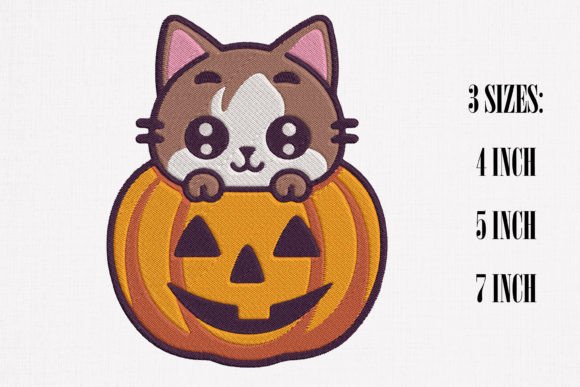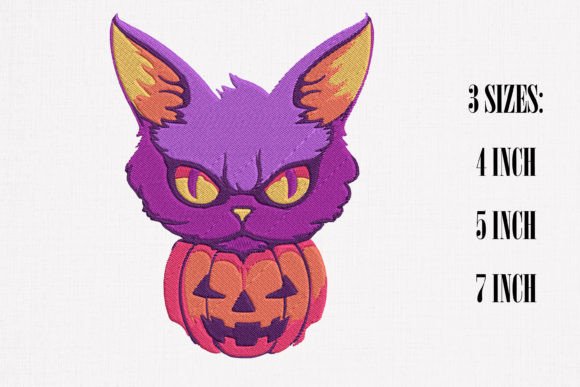
Halloween Cat with Pumpkin
First Impression: Festive, Friendly, and Booth-Ready
As an embroidery designer who’s prepped over 200 craft fair booths—from Portland bazaars to Nashville holiday markets—I know instantly when a design *lands*. Halloween Cat with Pumpkin delivers that rare balance: playful enough for kids’ onesies, sophisticated enough for farmhouse kitchen towels, and bold enough to stop foot traffic at a busy handmade market. It doesn’t scream “scary”—it smiles. That’s intentional. This isn’t gothic horror; it’s warm, approachable Halloween. Think pumpkin spice meets midnight black cat—friendly, seasonal, and quietly premium.
Where It Shines: Product-by-Product Reality Check
Halloween Cat with Pumpkin thrives where charm meets utility. On tote bag designs, it reads beautifully centered near the bottom hem—large enough to be legible from six feet away, small enough to leave room for hand-stitched handles or fabric labels. As apron embroidery, it works best on the left chest or lower pocket panel: the cat’s curve echoes the apron’s drape, and the pumpkin adds just enough color contrast against denim or oatmeal linen.
For tea towel embroidery, this design is gold. The clean lines hold up on textured cotton terry, and the compact shape avoids overcrowding—no awkward stretching across seams. As an embroidered patch, Halloween Cat with Pumpkin gains versatility: iron-on or sew-on, it becomes a fast-turnaround product for last-minute gift tags, denim jackets, or kids’ backpacks. On caps, proceed with caution—it’s doable on front panels, but avoid curved bill areas unless you’ve tested stitch density on similar fabric. For pillow covers and small pouches, it anchors the piece without overwhelming. And yes—it absolutely works on market bags and handmade gifts like embroidered gift boxes or mini canvas sacks.
What Makes It Sell (and What Makes It Stall)
This machine embroidery design succeeds because it’s instantly legible. At a glance, shoppers recognize both cat and pumpkin—no decoding needed. That clarity translates directly to faster decisions at craft fairs, where attention spans are measured in seconds. It scales well: as a small accent (1.5” wide on a baby onesie), it’s sweet and delicate; as a large focal design (4.5” on a tea towel), it feels intentional and crafted—not generic.
Photography? It’s a winner. Halloween Cat with Pumpkin pops against neutral backdrops—cream linen, charcoal cotton, natural wood—and holds detail in natural light. That means stronger Etsy listings, better printable mockups, and more trustworthy digital embroidery file previews. And for batch production? Yes—it’s repeatable. Clean outlines, balanced negative space, and moderate stitch density mean fewer thread breaks, less rehooping, and consistent results across dozens of finished products.
Careful-Use Notes: Don’t Guess—Test
Don’t assume. Even friendly designs have pitfalls. Halloween Cat with Pumpkin likely includes fine details—whiskers, pumpkin stem texture, or subtle shading—that can blur on textured towels or thick fabric. Tiny eyes or thin vine lines may vanish on dark fabric unless thread contrast is dialed in. On curved cap surfaces, stitch density matters: too dense = puckering; too sparse = loss of definition. And if the design includes small lettering (e.g., “Boo!” or “Meow”), confirm readability at 1.25” width before cutting into inventory.
Also—check whether the embroidery file includes multiple sizes. If not, resizing beyond ±15% risks distortion. Always verify hoop size compatibility with your machine and common hoops (4x4”, 5x7”) before ordering supplies.
Booth Impact & Brand Alignment
In a sea of glitter pumpkins and plastic ghosts, Halloween Cat with Pumpkin stands out by feeling handmade, not mass-produced. It supports brand consistency for small shop products: pair it with matching thread palettes (ochre, charcoal, cream) across your craft fair product line—totes, patches, towels—and customers subconsciously register cohesion. It elevates perceived value: a $28 embroidered tea towel feels worth it when the stitching is precise and the design feels curated, not clip-art.
At your booth, use one real mockup—not digital, not printed—stitched on actual fabric, hung on a rustic hanger or folded beside a cinnamon-scented candle. That tactile authenticity drives engagement. Buyers touch it. They ask, “Did you make this?” That’s your opening.
Designer’s Must-Do Checklist
- Test the design on scrap fabric—same weight and weave as your final product
- Check thread contrast on both light and dark fabric swatches
- Review spacing between cat and pumpkin: does it breathe, or feel cramped?
- Confirm hoop size and whether the design fits your most-used hoops
- Inspect stitch density—especially around curved edges and fine details
- Use the right stabilizer: cutaway for knits, tear-away for stable wovens, heavy-duty for towels
- Create at least one real mockup—not just a digital preview
- Compare fabric colors side-by-side: how does the pumpkin orange read on oatmeal vs. ivory?
- Confirm commercial licensing before selling finished products—this is non-negotiable for Etsy sellers and wholesale partners
Halloween Cat with Pumpkin isn’t just another digital embroidery file. It’s a thoughtful, market-tested design asset—one that bridges seasonal appeal with everyday wearability. When stitched right, displayed intentionally, and priced with confidence, it converts browsers into buyers. And in the world of handmade entrepreneurship, that’s not just craft—it’s commerce.