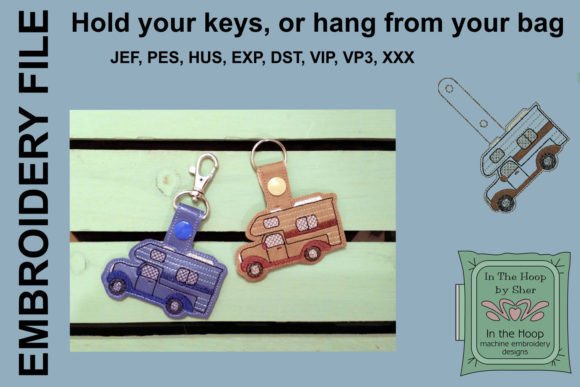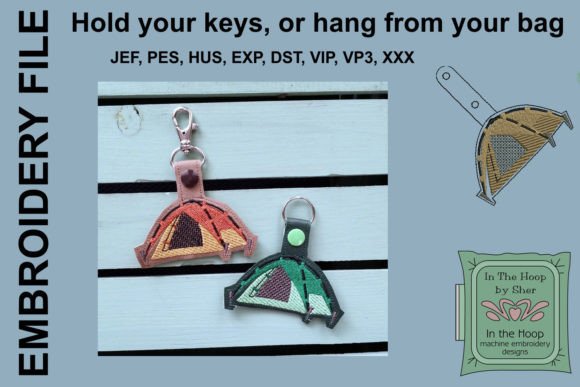
Tent Camping Key Fob
First Impressions: A Compact, Character-Full Campfire Vibe
Opening the Tent Camping Key Fob file feels like unzipping a well-packed gear bag—immediately familiar, intentionally simple, and quietly confident. It’s not trying to be a sprawling wilderness scene; it’s a focused emblem: a classic A-frame tent with subtle smoke curling from a tiny campfire, maybe a pine branch or two tucked beside it. The shape is compact and balanced—designed for small-scale impact, not wall art. There’s no excessive detail, but enough visual storytelling to spark recognition and warmth. It lands somewhere between rustic charm and modern minimalism, which makes it unusually versatile for handmade product lines.
Where This Design Actually Shines (and Where It Fits Naturally)
I recently used Tent Camping Key Fob as part of a custom embroidered tote bag collection for a local outdoor gear boutique—and it worked beautifully as a subtle brand accent on the lower corner of each bag. Not front-and-center, but intentional: a quiet nod to shared values. That’s its sweet spot. It’s ideal for items where embroidery plays a supporting role in storytelling—not shouting, but whispering “we get you.” Think sweatshirt pockets, baby onesie chest panels, tea towel hems, or the back strap of a canvas backpack. As an embroidered patch? Excellent. Clean edges, moderate stitch density, and clear negative space make it hold up well when heat-applied or sewn on.
For Etsy sellers and craft fair vendors, Tent Camping Key Fob adds instant thematic cohesion to camping-themed gift bundles—pair it with a hand-stamped trail map card and a cedar-scented candle, and customers instantly *feel* the mood. It also works surprisingly well on nursery decor: stitched onto a soft cotton muslin pillow cover or a lightweight blanket binding, it reads as gentle, gender-neutral, and grounded—not cutesy, not cliché.
Real-World Embroidery Considerations You Can’t Skip
This isn’t a design that forgives oversight. Because it’s built for small-format use, details like the fire’s glow or tent flap stitching rely on precise satin and fill stitch execution. On thin or stretchy fabric—say, a lightweight cotton t-shirt or baby rib knit—you’ll need medium-weight cutaway stabilizer underneath *and* a light tear-away on top to prevent puckering around those fine lines. I learned that the hard way on a sample sweatshirt sleeve: without proper stabilization, the flame detail blurred into a soft smudge instead of a crisp focal point.
Dark fabrics demand thoughtful thread color choices. The Tent Camping Key Fob doesn’t include pre-selected palettes, so test your thread against black or navy twill before committing. I found olive green + warm charcoal gray created strong contrast without looking harsh—whereas bright yellow flame thread on dark fabric read more “caution sign” than “cozy campfire.” Also, avoid dense layering: don’t place it directly over seams, zippers, or thick seam allowances. On curved surfaces like caps or beanies, reposition it toward the flatter front panel—not the crown curve—unless you’ve confirmed your machine handles distortion well.
What It Adds to Your Finished Product—Beyond Just Stitching
When executed cleanly, Tent Camping Key Fob elevates perceived value without raising production complexity. Customers notice the intention behind it—the restraint, the theme resonance, the handmade polish. It builds trust because it looks *designed*, not dropped-in. For small shop owners, that translates to stronger brand consistency across products: same motif, scaled appropriately for key fobs, patches, and tote bags. For personalized gifts—like a custom embroidered apron for a park ranger’s birthday—it delivers immediate emotional recognition. No explanation needed. Just a quiet, confident “yes, that’s exactly it.”
It also performs well in digital spaces. As a printable mockup element or thumbnail for an Etsy listing, Tent Camping Key Fob scales cleanly and reads clearly even at 200px width. Its balanced proportions and limited detail mean it doesn’t pixelate or lose legibility—unlike busier designs that collapse into visual noise at small sizes.
Designer Notes You’ll Want Before Threading Your Needle
- Always test on scrap fabric first—especially if using textured weaves like canvas or linen, where stitch definition can soften.
- Check thread color contrast on both light and dark backgrounds before digitizing final versions for client work.
- Review stitch density in the flame and tent pole areas—if it feels overly dense for your fabric weight, consider reducing density slightly in your editing software.
- Confirm hoop size compatibility—this design was clearly drafted for smaller hoops (likely 4x4 or 5x7), so double-check before loading onto larger frames.
- Inspect small corners and curves manually in your embroidery software preview—look for potential thread nesting or skipped stitches in tight turns.
- Test in black-and-white mockups to assess visual weight and balance without color distraction.
- Use appropriate stabilizer: medium cutaway for knits, tear-away for stable wovens, and fusible for lightweight applique layers.
- Verify licensing terms before selling finished items commercially—or reselling the embroidery file itself—as commercial embroidery rights aren’t implied by file inclusion alone.
A Thoughtful Tool, Not Just Another File
Tent Camping Key Fob isn’t flashy—but then, the best machine embroidery design rarely is. It’s purpose-built, context-aware, and respectful of both fabric and audience. Whether you’re stitching a single personalized gift or building a cohesive line of outdoor-themed handmade product, it functions like a reliable piece of gear: simple, durable, and quietly effective. Use it where authenticity matters more than volume—and where your customer values intention over ornament.