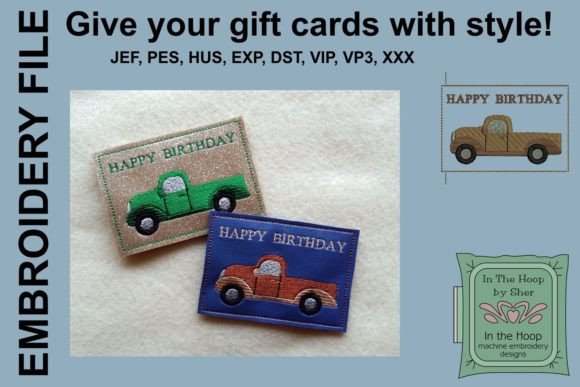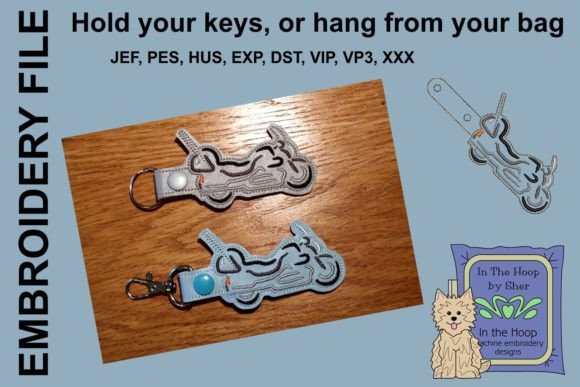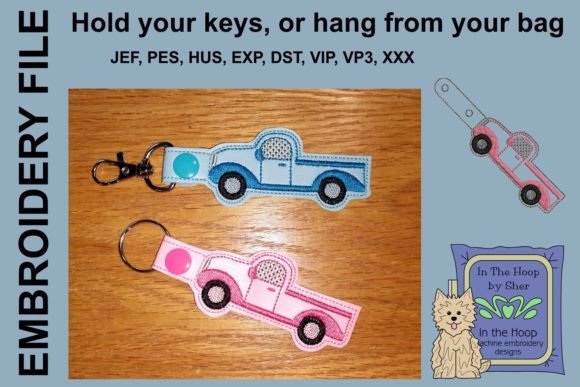
Truck Key Fob: A Craft Fair Standout
First Impression: Rugged Charm Meets Instant Recognition
Right off the bat, Truck Key Fob lands with confident, approachable energy—neither overly cute nor aggressively industrial. It reads as rugged charm: a warm nod to adventure, utility, and everyday pride in hardworking vehicles. That’s gold for craft fairs. Shoppers scanning a booth full of embroidered totes, aprons, and tea towels don’t pause for ambiguity—they stop for clarity, character, and connection. “Truck” is instantly legible. “Key fob” signals function and portability. Together, they promise a handmade product that feels both personal and purposeful.
Where It Shines: Booth-Ready Placement & Product Pairings
In a crowded market setting, Truck Key Fob excels as a small-shop product with big visual return. It’s not meant for a 12-inch tote bag front—but it’s perfect on a 4-inch leather keychain tab, a 3×4-inch embroidered patch sewn onto a denim jacket, or centered on a compact fabric pouch. As a craft fair product, it works especially well when displayed alongside complementary items: a set of truck-themed tea towel embroidery, a matching embroidered cap, or a mini pillow cover with the same motif. That cohesion builds brand consistency without requiring identical repeats—it’s thematic, not rigid.
On aprons? Yes—but best as a subtle side-pocket accent, not a chest centerpiece. On kitchen towels? Ideal for the lower corner near the hanging loop, where it reads cleanly against open space. As a standalone embroidered patch, it gains versatility: customers can apply it to backpacks, hats, or even vintage trucker jackets. And for Etsy sellers, pairing the machine embroidery design with printable mockups (e.g., key fobs on rustic wood backgrounds or stacked beside coffee mugs) boosts perceived value and simplifies listing creation.
Production Reality Check: Clarity, Scale, and Stitch Smarts
This isn’t a design that hides complexity behind charm. The phrase “detailed stitching” in the description is your cue to inspect closely. Before cutting fabric or loading hoops, ask: Where are the dense stitch areas? Truck outlines, wheel treads, or cab windows could pack tight satin or fill stitches—risking puckering on lightweight cotton or stiffening on textured tea towels. Tiny details like grille lines or headlights may blur at under 2 inches wide, especially on dark fabric or thick stabilizer. Lettering—if included in the embroidery file—must be legible at 0.3 inches tall; otherwise, it becomes decorative noise, not storytelling.
Truck Key Fob performs best when treated as a focused focal point, not background filler. It’s not a repeatable all-over pattern—it’s a signature moment. That makes batch production efficient: one clean hoop size, consistent thread colors across runs, minimal re-hooping between pieces. But don’t assume uniformity across substrates. Test on scrap denim *and* linen *and* canvas. Compare how stitch density reads on smooth twill versus looped terry cloth. A design that sings on a cap’s curved surface might flatten into mush on a plush pillow cover.
Photography & Perception: Why It Converts Online
Here’s where Truck Key Fob quietly outperforms flashier motifs: it photographs with honest, tactile appeal. No glitter, no metallics, no gradients that shift under lighting. Just clear contrast, defined edges, and visible thread texture—ideal for Etsy listings and Instagram reels. When styled thoughtfully (e.g., clipped to a worn leather strap beside a steaming mug and road map), it tells a story that resonates with makers and truck lovers alike. That authenticity strengthens buyer engagement far more than generic “cute” motifs.
For digital sellers, bundling the digital embroidery file with usage tips (“Works best on medium-weight woven fabrics with tear-away stabilizer”) adds trust and reduces support requests. Including a note about commercial licensing—critical for small shop owners selling finished products—is non-negotiable. If the license isn’t explicitly stated in the file metadata or download instructions, confirm before embroidering 50 units for your next craft fair.
Designer Notes You Can’t Skip
- Always test on scrap fabric—especially if using textured towels or curved caps.
- Check thread contrast: light gray thread on navy fabric may vanish; black on charcoal needs extra density.
- Review spacing between elements—tight gaps between wheels and frame can cause thread breaks or skipped stitches.
- Confirm hoop size compatibility with your machine and common projects (e.g., 4×4" for patches, 5×7" for pouches).
- Inspect stitch density visually—not just in software. Overly dense fills increase production time and wear on needles.
- Match stabilizer to fabric: cut-away for knits, tear-away for stable wovens, mesh for lightweight silks.
- Create at least one real mockup—not just a digital preview—before committing to a colorway or product type.
- Compare how the design reads across three fabric colors: light, medium, and dark. Adjust thread choices accordingly.
- Verify commercial use rights before selling finished handmade product. When in doubt, contact the designer or platform.
Final Thought: A Small Item With Big Booth Power
Truck Key Fob isn’t just another Transportation motif—it’s a conversation starter, a gift-with-purpose, and a reliable anchor in a handmade display. It balances personality with practicality, detail with durability, and nostalgia with modern craft sensibility. For embroidery business owners juggling tote bag designs, apron embroidery, and tea towel embroidery, this Embroidery piece offers a low-risk, high-return opportunity: compact enough to produce fast, distinctive enough to stand out, and emotionally resonant enough to earn repeat buyers. In a sea of sameness, Truck Key Fob doesn’t shout—it nods, winks, and hands you the keys to a stronger craft fair weekend.