Cute Shark Embroidery Design
First Impression: Playful, Polished, and Perfectly Sized for Boutique Apparel
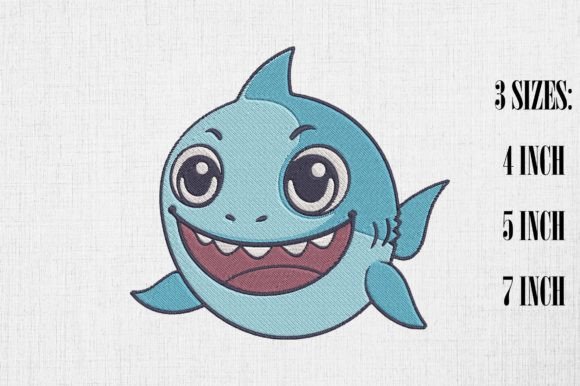
As an embroidery designer who’s developed collections for small clothing brands and Etsy sellers over the past decade, my first glance at Cute Shark told me everything I needed to know: this isn’t just another cartoon animal—it’s a thoughtfully balanced machine embroidery design with clear commercial intent. The visual personality leans into soft charm without tipping into cutesy overload. Rounded fins, expressive eyes, and subtle shading give it warmth and dimension, while clean outer outlines ensure crisp stitch definition on fabric. It reads as playful yet polished—ideal for a boutique brand that values handmade authenticity but refuses to sacrifice professional finish.
Sweatshirt & Hoodie Performance: Where Cute Shark Truly Shines
Cute Shark excels in sweatshirt embroidery—especially on neutral heather grays, oatmeal hoodies, and soft black French terry. Its moderate scale (likely designed for 4"–5" hoop size, though always verify Creative Fabrica product details) fits naturally on chest placement without overwhelming the garment. On oversized hoodies, it holds presence without looking cramped; on petite youth sizes, it scales down gracefully if digitized with flexibility in mind. For sleeve accents or back designs, its compact shape and balanced weight distribution prevent puckering—even on ribbed cuffs or curved shoulder seams.
What Works Well Across Garment Types
- T-shirts: Clean stitch density means it lays flat on lightweight cotton and blends beautifully with vintage-inspired branding.
- Denim jackets: Holds strong contrast against indigo—pair with ecru or navy thread for subtle cohesion or bright coral for joyful pop.
- Tote bags & lifestyle merch: Translates seamlessly into printable mockups and social media graphics thanks to its confident silhouette and friendly expression.
- Seasonal cozy layers: Looks especially inviting on cream fleece pullovers or charcoal knit sets—adding personality without visual clutter.
Design Considerations for Real-World Production
While Cute Shark is versatile, it’s not “set-and-forget.” As with any Animals category embroidery file, success hinges on intentional execution. On stretchy fabrics like jersey knits or thin fleece, a medium-weight cutaway stabilizer is non-negotiable—especially around the shark’s rounded belly and fin curves where tension shifts. For dark garments, test thread colors carefully: a matte charcoal or deep teal often reads richer than black, avoiding a “flat” look against heavy fabric texture.
Notice how the mouth and eye details are stitched—not overly dense, but with enough fill to avoid transparency on lighter threads. That balance makes Cute Shark forgiving across varied thread brands and machine calibrations. Still, always run a test on scrap fabric *identical* to your production batch: same dye lot, same pre-wash treatment, same stabilizer combo.
Brand-Building Value Beyond the Stitch
This isn’t just decoration—it’s brand language in thread form. When used consistently across a small shop product line (think matching sweatshirts, totes, and baby onesies), Cute Shark becomes instantly recognizable. Customers begin associating that cheerful, approachable marine motif with your boutique’s voice—trust builds through visual consistency, not just quality stitching. For Etsy sellers, it elevates listing photography: the design’s clarity and charm translate well into lifestyle shots and digital embroidery previews, supporting stronger conversion from scroll to cart.
It also supports storytelling. Pair it with minimalist typography (“Ocean Days,” “Tiny Fin Club”) and you’ve got cohesive seasonal bundles—no need for complex illustration work. That’s valuable time savings for creative entrepreneurs juggling design, production, and marketing.
Where to Use It Carefully—and Where to Lean In
Avoid placing Cute Shark directly over high-stretch zones like side seams or underarm gussets unless you’ve confirmed stitch density and stabilizer hold up in testing. Likewise, skip tiny lettering integration unless the original Creative Fabrica embroidery file includes coordinated fonts—many animal designs don’t. And while it works on towels and tablecloths, remember: for apparel-focused projects, prioritize placements where movement won’t distort the shape—center chest, upper back, or lower left front are safest.
On curved surfaces (like baseball caps or bucket hats), re-hooping may be needed—but that’s true of most embroidery files. What sets Cute Shark apart is how cleanly its curves digitize. No jagged edges, no excessive jump stitches. That professionalism shows in the finished product—and customers notice.
Practical Designer Notes Before You Stitch
- Always check the Creative Fabrica product page for exact file formats (PES, DST, EXP, etc.), included sizes, and licensing terms—especially if selling finished apparel commercially.
- Confirm hoop size compatibility with your machine before ordering—some versions may include multiple sizes; others are single-size only.
- Review stitch density visually in your embroidery software—if fills appear too tight for lightweight knits, consider lightening density manually (if your software allows).
- Compare placement options using a printable mockup: print the design at actual size, pin it to your garment, and photograph it in natural light to assess proportion and balance.
- For Etsy listings or social posts, pair Cute Shark with authentic behind-the-scenes shots—not just flat lays. Show the thread spool next to the hoodie, or a close-up of the stitch texture on ribbed fabric.
Final Thought: A Reliable Anchor for Your Next Collection
Cute Shark isn’t flashy—but it’s dependable, expressive, and quietly sophisticated. In a market flooded with over-digitized trends, it stands out by doing exactly what great embroidery should: enhancing the garment, not competing with it. Whether you’re launching a coastal-themed kids’ line, building a unisex lounge collection, or adding charm to your handmade product range, this machine embroidery design earns its place in your Creative Fabrica library—not as filler, but as foundation.