Spider Sash Embroidery Design
A Boutique Designer’s First Look at Spider Sash
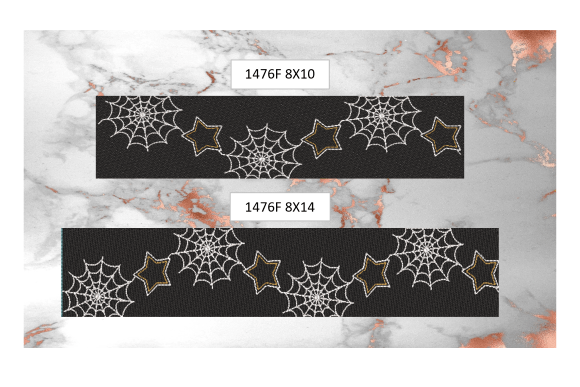
As an embroidery designer who’s developed collections for small clothing brands and Etsy sellers for over a decade, I approach every Creative Fabrica embroidery file with two questions: “Does it translate to apparel?” and “Does it elevate the brand—not just decorate it?” When I first opened Spider Sash, I wasn’t thinking about quilting—it was sweatshirts. Neutral heather grey hoodies. Soft pastel crewnecks. Even heavyweight denim jackets styled for autumn launches. Visually, Spider Sash reads as playful yet intentional—curved, organic, and slightly asymmetrical, with rhythmic spacing that suggests movement rather than rigidity. It’s not cartoonish or overly literal (no fangs or glowing eyes), so it avoids seasonal cliché while still landing firmly in the Halloween category through mood and motif alone. The stitch density feels balanced—not sparse enough to look unfinished, not dense enough to stiffen lightweight knits. That’s rare in themed embroidery files.
Why Spider Sash Works on Sweatshirts & Hoodies
Sweatshirt embroidery demands restraint. Too much density = puckering. Too little detail = lost impact. Spider Sash lands in the sweet spot: its repeating sashing rhythm reads clearly at 3–4 inches wide across a chest placement, especially when scaled thoughtfully. On oversized hoodies, I’d use it vertically along the sleeve seam—subtle but distinctive. For back designs, piecing two or three repeats creates a cohesive band without overwhelming the garment’s drape. On ribbed fabric or fleece, the design’s gentle curves adapt better than sharp-cornered motifs. Just remember: test on scrap fabric first. Fleece traps heat and can distort delicate satin stitches if stabilizer choice is off—medium-weight cutaway works best here.
Beyond Halloween: Versatility Across Apparel Types
Don’t limit Spider Sash to October. Its clean line work and open negative space make it surprisingly adaptable. On light-wash denim jackets, it reads as artisanal texture—not costume. On oatmeal-toned t-shirts, paired with muted thread colors like charcoal grey or dusty sage, it becomes a quiet signature detail. For tote bags and cozy seasonal loungewear, the sashing structure lends itself to bordering hems or framing pockets. As a boutique brand, using Spider Sash consistently across your product photos—say, on a matching hoodie/tote set—builds visual consistency and strengthens buyer trust. Customers begin to recognize your aesthetic language, even without logos.
Placement Considerations for Real-World Garments
- Chest placement: Ideal at 3.5" wide on standard sweatshirts. Avoid centering too high—it should sit just below the collarbone, not under the throat.
- Sleeve accents: Works beautifully on the upper bicep of oversized hoodies, especially when mirrored on both arms.
- Back panels: Use as a horizontal band across the lower back—pair with a simple monogram or tagline above for balance.
- Curved surfaces: Test hoop size carefully. If your machine requires re-hooping mid-design, the repeat alignment must be precise—check Creative Fabrica product details for seam allowances or alignment marks.
- Dark garments: Opt for tonal thread (e.g., black-on-black) for sophistication, or high-contrast white for boldness—but verify stitch density won’t cause shadowing on heavy fleece.
Design Integrity Meets Commercial Practicality
What makes Spider Sash feel premium isn’t just the digitizing—it’s how it behaves. There are no tiny lettering elements or micro-details that vanish on knit fabric. No dense fill areas that risk gapping on stretchy blends. That matters for commercial embroidery output: fewer re-dos, cleaner press-ready results, and higher perceived value in your finished product. For Etsy sellers, that translates directly to better lifestyle product photos—Spider Sash photographs well in natural light because its rhythm catches the eye without shouting. And when you pair it with printable mockups for your listings, the design holds up across formats: Instagram carousels, Pinterest pins, even email headers.
Smart Workflow Notes for Embroidery Designers
Before stitching your first batch, do these five things:
- Review the embroidery file specs on Creative Fabrica—confirm hoop size compatibility and whether the design includes multiple sizes or color-separation guides.
- Test on scrap fabric that matches your production garment—especially important for fleece, brushed cotton, or textured knits.
- Choose stabilizer based on fabric weight, not habit. Lightweight cutaway for stable knits; tear-away for crisp cotton tees.
- Compare thread color contrast on both light and dark fabrics—you’ll likely need two palettes for one collection.
- Check licensing terms before selling finished apparel. Some Creative Fabrica embroidery designs allow commercial use; others require extended licenses for resale.
Final Thought: A Quietly Confident Design Choice
Spider Sash won’t dominate your garment—but it will define it. It’s the kind of machine embroidery design that supports your brand voice instead of competing with it. Whether you’re launching a small shop product line, building a handmade product catalog for Etsy, or creating custom apparel for local boutiques, this file earns its place in your digital embroidery library by being both seasonally resonant and commercially durable. It’s playful without being childish, thematic without being limiting, and detailed without being demanding. In a market flooded with loud, trend-chasing motifs, Spider Sash is the thoughtful counterpoint—and that’s exactly what boutique apparel needs.