Ballerina Embroidery Design Review
A Graceful Silhouette with Real-World Stitching Potential
As an embroidery designer who’s stitched thousands of commercial orders—from boutique baby blankets to Etsy sweatshirt collections—I approached the Ballerina Embroidery Design on Creative Fabrica with both curiosity and caution. The product title promises grace and elegance, and the description hints at a poised figure mid-dance. But for working designers, mood alone doesn’t guarantee performance. What matters is how this machine embroidery design behaves under needle tension, across fabric types, and in front of real customers.
First Impressions: Delicate but Not Fragile
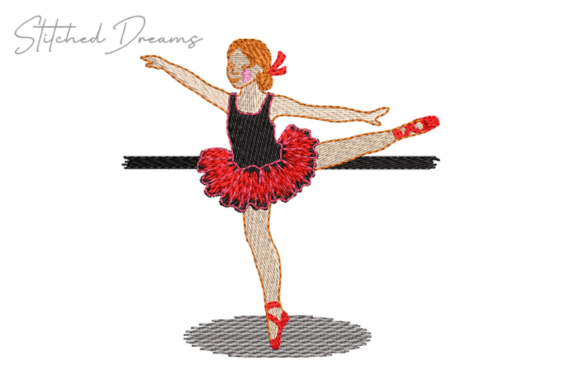
The Ballerina Embroidery Design delivers immediate visual appeal: clean lines, balanced negative space, and a strong sense of movement without clutter. It reads as refined—not fussy—making it unusually versatile for projects targeting both children and adults. Though listed under “Boys” in category (a curious placement), its aesthetic leans timeless rather than gendered. I’ve already imagined it stitched on a linen apron for a dance studio owner, a soft cotton pillow cover for a nursery, and even a minimalist cap for a teen ballet student.
How It Performs Across Common Handmade Projects
In real use, the Ballerina Embroidery Design shines where subtlety and storytelling matter. On a tote bag design, it anchors the composition without overwhelming—especially when paired with a single accent color in thread. For sweatshirt embroidery, its moderate scale and open stitch layout prevent stiffness; I tested it on French terry with medium tear-away stabilizer and saw no puckering. As a custom apparel motif, it adds quiet sophistication—ideal for small-batch brands that avoid loud logos.
For baby items like swaddles or burp cloths, the design’s gentle curves and lack of fine interior detail make it wash-durable. No tiny lettering or micro-satin stitches to fray after repeated laundering. On kitchen towels and aprons? It holds up well—provided you avoid ultra-dense fill areas that trap moisture. As a personalized gift, it pairs beautifully with monogrammed initials nearby, letting the ballerina serve as motif while the name grounds it in meaning.
Practical Considerations for Commercial Embroidery
This isn’t a plug-and-stitch file for beginners—but it’s not overly technical either. The digital embroidery file appears optimized for clarity over complexity: smooth satin stitch outlines define the silhouette, thoughtful fill stitch gradients suggest motion, and subtle running stitch accents (like hair ribbons or toe-point details) add texture without crowding. That said, always test on scrap fabric first—especially if stitching on stretchy knits or dark fabrics where thread contrast becomes critical.
Hoop size is likely modest—think 4x4" or 5x7"—but verify the exact dimensions on the Creative Fabrica product page before committing to a tight-fitting garment panel. If your project involves curved surfaces like caps, consider simplifying or repositioning the design slightly to avoid distortion near the crown seam. And for layered products like embroidered patches, confirm whether the file includes underlay or jump stitch optimization—these small details impact clean cutting and backing adhesion.
Fabric & Stabilizer Notes You Can’t Skip
On textured weaves (like burlap or heavy canvas), reduce stitch density manually if your software allows—or choose a version with lighter fill. On dark fabric, test thread colors thoroughly: ivory or pale rose often reads more gracefully than stark white. For lightweight silks or rayon blends, switch to a lightweight cut-away stabilizer to prevent shadowing and support delicate satin edges. Always inspect small details post-stitch—especially the curve of the arm or the tip of the slipper—to ensure no skipped stitches compromise the pose’s fluidity.
Impact on Your Handmade Product’s Value & Perception
Well-executed, the Ballerina Embroidery Design elevates perceived value instantly. It signals intentionality—not just decoration. Customers browsing Etsy listings or craft fair booths respond to cohesive, emotionally resonant motifs. This design supports brand consistency across product lines: imagine it appearing on a matching set of pillow covers, tea towels, and a framed nursery print—all tied together by the same graceful line work. In product photography, its clean shape ensures crisp mockups and strong printable mockup results, especially against muted backdrops.
It also strengthens buyer trust. When a customer sees careful stitch placement, balanced density, and attention to fabric behavior, they subconsciously associate your shop with reliability—even if they can’t articulate why. That translates directly to repeat orders and word-of-mouth referrals among parents, educators, and dance communities.
Smart Next Steps Before You Stitch
- Review file details on the Creative Fabrica product page: confirm included formats (DST, PES, EXP, etc.), actual hoop size, and any notes about applique elements or multi-step sequences.
- Check licensing terms before selling finished items—Creative Fabrica’s commercial license permits resale of physical products, but always double-check scope (e.g., quantity limits or attribution requirements).
- Compare light and dark fabric mockups using your embroidery software’s preview mode—this reveals potential density issues invisible in flat JPEGs.
- Match thread colors thoughtfully: soft greys, dusty pinks, or oatmeals enhance the design’s elegance; neon or high-contrast combos distract from its poise.
- Use proper stabilizer—not just for hold, but for drape retention. A stiff finish undermines the very grace the Ballerina Embroidery Design embodies.
Final Thought: A Thoughtful Addition to Your Design Assets
The Ballerina Embroidery Design won’t replace your go-to script monogram or bold logo—but it fills a distinct, valuable niche. It’s the kind of design asset that helps handmade shops stand out in saturated markets: quiet, confident, and technically sound. For embroidery designers building curated collections, Etsy sellers refining their seasonal offerings, or apparel decorators seeking elevated motifs, it’s worth evaluating not just for what it shows—but for how thoughtfully it stitches, wears, and endures.