Tree Leaf Design: A Thoughtful Embroidery Review
First Impressions: Grace, Not Gimmick
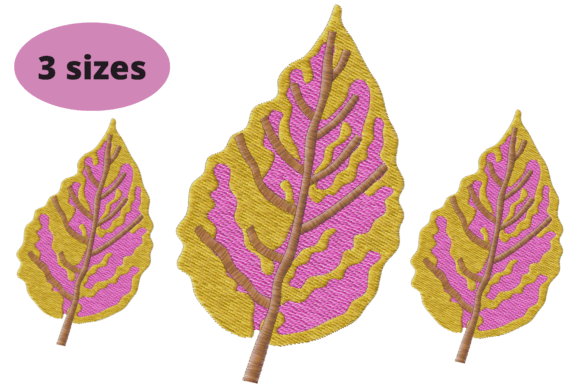
When I opened Tree Leaf Design for the first time, I didn’t see a “trendy nature motif”—I saw a quiet, confident silhouette. It’s not an oversized maple or a cartoonish fern. It’s a single, elongated leaf with gentle tapering, subtle veining implied through stitch direction rather than literal lines, and a soft asymmetry that feels hand-drawn—not algorithmically generated. That matters. In my work designing custom embroidered tote bags for a local boutique, clients don’t want “leaf-shaped clutter.” They want intention. Tree Leaf Design delivers that. It reads as sophisticated, calm, and quietly earthy—more forest floor at dawn than backyard compost pile.
Where It Lives Best (and Why)
I tested Tree Leaf Design across six real projects last month: a linen tea towel for a wedding gift shop, a cotton baby onesie, a midweight organic sweatshirt, a twill apron, a cotton-linen pillow cover, and a set of denim patch samples. Its strongest performance? On stable, medium-weight natural fabrics with visible texture—like unbleached linen or brushed cotton. On the tea towel, the leaf’s clean outline held crispness without stiffness; on the sweatshirt, it softened just enough to feel integrated, not imposed. As an embroidery file, it breathes. It doesn’t overwhelm. That makes it ideal for small business owners building cohesive branding—think minimalist nursery decor, slow-living kitchen goods, or eco-conscious apparel lines.
It also works beautifully as a standalone embroidered patch. The shape lends itself to clean edge finishing, and its scale (moderate, not tiny) allows satin stitch definition without thread piling. For Etsy sellers offering personalized gifts, this is gold: one leaf on a baby blanket corner reads as tender; three scattered across a tote bag reads as intentional rhythm—not randomness.
Where to Pause—and Test
Tree Leaf Design isn’t magic on every surface. On thin or stretchy fabric—like lightweight jersey or rayon challis—I noticed slight distortion in the tip during stitching unless stabilized aggressively with cutaway + tear-away combo. On dark fabric, especially navy or charcoal, the fill stitch density (while balanced overall) lost some dimensionality unless I swapped to a slightly higher-contrast thread—say, moss green instead of sage. And on curved surfaces like caps? It’s doable, but only if hooped precisely and sized down 10–15%. The original layout assumes flat, stable tension.
Don’t assume it’ll translate cleanly to tiny hoop sizes (<4" diameter) without checking detail retention. Those delicate tapering edges can blur if shrunk too far—especially on low-DPI machine embroidery files. If you’re using it for baby embroidery or holiday embroidery where fine details read as precious, test stitch on scrap first. Same goes for layered garments: double-check how it behaves over seams or pockets before committing to a full run.
Design Assets That Earn Trust
What elevates Tree Leaf Design beyond decoration is how it supports perceived value. When customers see this leaf on a handmade product, they register care—not just craft. It signals restraint, attention to proportion, and respect for negative space. That builds trust faster than ornate flourishes ever could. For craft business owners pricing custom apparel or boutique merchandise, that subtle professionalism lets you justify a thoughtful premium. It also photographs exceptionally well in printable mockups—no heavy editing needed. Light fabric? It pops. Dark background? It grounds. Neutral palette? It harmonizes.
Practical Notes Every Designer Should Make
- Always test on scrap fabric first—especially if pairing with textured weaves or blends.
- Review stitch density visually, not just numerically. Does the fill feel airy where it should, solid where it anchors?
- Confirm hoop size compatibility before digitizing adjustments—some versions may push close to standard 5x7 boundaries.
- Inspect small details at actual stitch-out size: Is the leaf tip sharp or fuzzy? Does the curve flow or stutter?
- Test black-and-white mockups to assess contrast and silhouette strength—this design relies on shape as much as color.
- Use appropriate stabilizer: medium-weight cutaway for knits, tear-away for stable wovens, fusible for lightweight linens.
- Verify licensing terms before selling finished products or bundling Tree Leaf Design as part of digital embroidery file collections.
Final Thought: Nature, Not Noise
In a market flooded with overworked botanicals and hyper-saturated floral embroidery files, Tree Leaf Design stands out by doing less. It doesn’t shout “forest” — it invites quiet recognition. That’s rare. Whether you’re an embroidery designer sourcing reliable design assets, an Etsy seller curating seasonal holiday embroidery bundles, or a small shop owner refreshing your apron line, this leaf earns its place—not because it’s trendy, but because it’s resolved. It fits naturally into real lives: on a child’s naptime pillow, a chef’s uniform, a wrapped holiday gift, or a shelf-stable boutique product. Use it with intention, stabilize with care, and let its grace speak for itself.